Stay compliant: smart sales tools for LinkedIn & B2B outreach

TL;DR:
- Ignoring compliance risks, such as GDPR and LinkedIn policies, can lead to severe legal fines and account bans that disrupt sales pipelines.
- Evaluating sales tools requires verifying authorized integrations, proper data handling, and adherence to platform-specific rules to ensure long-term safety.
- Embedding compliance into workflows strengthens reputation, boosts customer trust, and creates a competitive edge in regulated B2B markets.
Most sales tools promise you speed, scale, and a full pipeline. What they don’t advertise is the compliance risk buried in the fine print. Use the wrong automation tool on LinkedIn, send a single batch of emails without a proper unsubscribe link, or store EU contact data without a lawful basis, and you could face account bans, legal fines, or both. This guide cuts through the noise so you can choose tools and build workflows that protect your business without sacrificing the outreach results you actually need.
Table of Contents
- What does compliance mean for sales tools?
- The hidden risks of ignoring compliance
- How to evaluate sales tools for compliance
- Compliance-forward workflows for B2B LinkedIn outreach
- Why compliance isn’t a growth-killer—in fact, it’s a competitive advantage
- Take your compliant LinkedIn sales to the next level
- Frequently asked questions
Key Takeaways
| Point | Details |
|---|---|
| Compliance is multifaceted | Sales tools must comply with privacy laws, marketing regulations, and platform rules for full protection. |
| Non-compliance is costly | Fines for US email violations can exceed $50,000 per message, and LinkedIn bans are often permanent. |
| Evaluate before you automate | Always check tool compliance credentials and avoid platforms that encourage scraping or unapproved automation. |
| Workflows drive safety | Design your prospecting process to include compliance-friendly steps with documentation at each stage. |
| Compliance is a sales asset | Positioning compliance as part of your brand gives you a trust and delivery advantage with B2B buyers. |
What does compliance mean for sales tools?
With the risk landscape in mind, let’s break down what compliance actually involves for your sales stack.
Compliance is one of those words that gets thrown around without much explanation, especially in sales. For most reps, it means “don’t spam people.” For your legal team, it means something far more detailed. In practice, running a compliant sales operation in 2026 requires you to think about three separate but overlapping categories.
Compliance in sales tools is best understood by separating it into three distinct pillars: privacy and data protection, marketing communications, and platform-specific rules. Each one carries its own requirements and risks.
Here is what each pillar actually covers for B2B sales teams:
-
Data privacy compliance (GDPR/UK GDPR): If you are prospecting into Europe or the UK, GDPR governs how you collect, store, and process contact data. You need a lawful basis to process someone’s data, a way to respond to data subject access requests (DSARs), and clear data retention policies. US teams often assume GDPR doesn’t apply to them. It does, the moment you have a European contact in your CRM.
-
Marketing communications compliance (CAN-SPAM/TCPA): For US email outreach, CAN-SPAM rules require accurate sender information, a physical address, a clear opt-out mechanism, and no deceptive subject lines. TCPA applies to automated calls and text messages. These aren’t optional guidelines. They’re federal law.
-
Platform rules compliance (LinkedIn Terms of Service): LinkedIn has its own policies that operate completely independently of legal requirements. Scraping profiles, using bots to send connection requests, or running unauthorized automation can get your account restricted or permanently banned, regardless of whether any law was technically violated.
For B2B teams, understanding how these three areas interact matters enormously. You can be fully CAN-SPAM compliant on email and still violate LinkedIn’s terms if you’re pulling data through an unauthorized scraper. That’s why compliant LinkedIn prospecting requires you to think about all three pillars together, not just one at a time.
The hidden risks of ignoring compliance
Knowing what compliance requires, let’s see why cutting corners is so risky, both legally and for your sales pipeline.
Here’s the uncomfortable truth most sales tool vendors won’t share with you: the consequences of non-compliance are severe enough to shut down an entire sales operation. Let’s talk specific numbers first.
CAN-SPAM violations can reach up to $53,088 per individual email sent in violation of the law. If you send a batch of 1,000 emails without a proper unsubscribe mechanism, you’re looking at theoretical exposure in the tens of millions.
That’s not a scare tactic. That’s the actual statutory penalty structure. And critically, your organization stays liable even when you use a third-party vendor to send those emails. The vendor handles delivery. You own the legal exposure.

On the LinkedIn side, the risks are just as real, even if the dollar figures don’t show up in the same way. Non-compliant automation tools that scrape profiles or automate member actions are treated as direct violations of LinkedIn’s Terms of Service. LinkedIn actively detects unusual activity patterns, and when it does, it doesn’t usually send a warning. It restricts or permanently bans the account.
Here are the top three consequences sales teams face when they skip compliance:
-
Account suspension or permanent LinkedIn ban: Your outreach history, saved leads, connection network, and sales pipeline built through LinkedIn disappear entirely. Rebuilding takes months, not days.
-
Legal fines and regulatory investigations: A single CAN-SPAM complaint that escalates to the FTC or a GDPR complaint filed with a European Data Protection Authority can trigger an audit. Legal defense costs alone can run into six figures for small businesses.
-
Deliverability collapse: Even without a formal fine, using non-compliant email practices will damage your sender reputation. Blacklisted domains mean your emails stop reaching inboxes, including your existing customers.
Pro Tip: Don’t rely on your vendor’s claims of being “CAN-SPAM compliant” or “GDPR ready.” Ask to see their actual documentation. Request their Data Processing Agreement (DPA) before signing any contract. A vendor that can’t produce this quickly is a red flag.
Learning more about automated prospecting in B2B can help you understand where automation adds value without creating legal exposure.
How to evaluate sales tools for compliance
Once you know what’s at stake, you need a process for choosing safe tools. Here’s how to check for true compliance before you commit.
Not every sales tool vendor is being dishonest. But many are optimized to sell you on features, not protect you from risk. Here’s a practical framework for evaluating any tool you’re considering for LinkedIn, email, or data management.
Questions to ask every vendor before you sign:
- Does your tool send automated LinkedIn messages or connection requests on my behalf without my manual input?
- How do you handle unsubscribe requests, and what happens to that data afterward?
- Where is my contact data stored, and is that storage GDPR compliant?
- Do you have a signed DPA available, and are you registered as a data processor under GDPR if applicable?
- Is your integration with LinkedIn an authorized integration, or does it use scraping?
That last question is the most important one. LinkedIn explicitly classifies scraping tools and bots as non-compliant, and the safest tools use only authorized integrations or LinkedIn’s native features.
| Tool type | LinkedIn compliance | Legal compliance | Risk level |
|---|---|---|---|
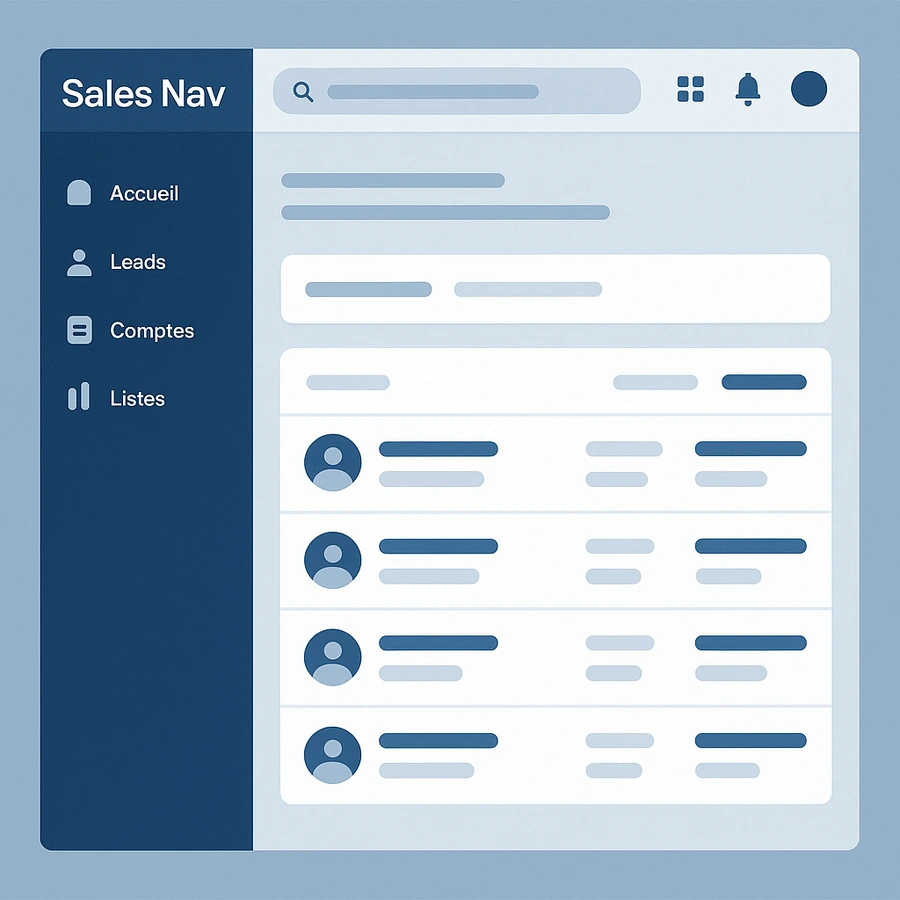
| Authorized LinkedIn tools (Sales Navigator) | Full | High when configured correctly | Low |
| Typical third-party automation | Varies, often non-compliant | Depends on vendor | High |
| Manual outreach | Fully compliant | Compliant with proper email setup | Very low |
| CRM with approved LinkedIn integration | High | High | Low to moderate |
Look at that table carefully. “Third-party automation” sits at high risk not because automation is inherently wrong, but because most tools in this category aren’t using authorized access. They mimic human behavior to avoid detection. That’s exactly what LinkedIn’s terms prohibit.
Red flags that signal a risky tool:
- No clear DPA or privacy policy for data processors
- Claims to “bypass LinkedIn limits” or “avoid detection”
- Bulk connection request sending with no manual step
- No opt-out mechanism in email sequences
- Data stored in unknown jurisdictions without documentation
For teams serious about results, looking at best prospecting strategies that prioritize quality over volume is a smarter long-term play. And for smaller teams, the SMB LinkedIn strategies that work within platform rules tend to outperform aggressive automation on conversion rates anyway.
Compliance-forward workflows for B2B LinkedIn outreach
Now, let’s translate compliance from theory to practice with workflows that protect your business and conversions.
Building a compliant outreach process doesn’t require you to slow down. It requires you to think clearly about what channel you’re using, what rules govern it, and how you’ve configured your tools. Here’s a step-by-step approach that works for both US and European markets.
-
Segment your outreach by channel from the start. Decide early which conversations belong on LinkedIn, which go to email, and which might involve a phone call. Each channel has different rules. Keeping them clearly separated prevents accidental cross-contamination where, for example, data scraped from LinkedIn gets fed into a cold email sequence without proper consent review.
-
Verify your email automation for CAN-SPAM compliance. Every sequence must include a physical mailing address, a clear sender identity, and a functioning unsubscribe mechanism. Test this before launch, not after your first complaint. Platform-level separation of compliance priorities is essential here, treating email and LinkedIn as distinct regulatory environments.
-
Configure LinkedIn outreach using only authorized features. Use Sales Navigator’s built-in InMail, saved lead lists, and alerts rather than third-party tools that automate actions at volume. Check your CRM’s LinkedIn integration documentation to confirm it uses an approved connection.
-
Review your data handling before adding anyone to your CRM. For EU contacts, confirm you have a lawful basis for processing their data. Legitimate interest is often cited for B2B prospecting, but it requires a documented balancing test. Don’t skip this step.
-
Document everything. Compliance audits often hinge less on what you did and more on whether you can prove what you did. Keep records of your consent mechanisms, your data retention policies, and any vendor agreements that cover data processing.
Pro Tip: Create a one-page compliance checklist for every new campaign before it goes live. It takes ten minutes and gives you something concrete to show if a complaint is ever filed.
| Workflow step | Compliance requirement | Channel |
|---|---|---|
| Segment contacts | GDPR lawful basis check | All channels |
| Email sequence setup | CAN-SPAM (unsubscribe, sender ID) | |
| LinkedIn connection/InMail | LinkedIn Terms of Service | |
| CRM data storage | GDPR data processing agreement | All channels |
| Outreach documentation | Audit trail for regulators | All channels |
These steps are practical for any sales team, not just legal departments. Looking at proven lead generation methods and applying them within this framework gives you the dual benefit of strong pipeline results and protected operations. And Sales Navigator tips built around native features almost always outperform high-risk automation in terms of conversion quality.

Why compliance isn’t a growth-killer—in fact, it’s a competitive advantage
Stepping back from the technical guidance, here’s why compliance should be part of your growth strategy, not just risk management.
Most sales leaders treat compliance as a tax on efficiency. Something you deal with reluctantly, in the smallest possible dose, to avoid getting fined. That framing is costing them deals they don’t even know they’re losing.
Here’s the perspective that most compliance articles won’t give you: in B2B sales, especially in regulated industries like finance, healthcare, or enterprise software, your compliance posture is increasingly part of your sales pitch. Buyers in Europe already expect vendors to demonstrate GDPR compliance before signing. Procurement teams at large US companies run vendor security and data handling reviews as standard practice. If your outreach process can’t survive that level of scrutiny, you won’t make it past the evaluation stage.
The forward-thinking sales orgs we see winning in 2026 aren’t treating compliance as a checkbox. They’re treating it as a moat. When your competitors are getting accounts banned and email domains blacklisted from aggressive automation, your compliant process keeps delivering results. Your sender reputation stays intact. Your LinkedIn presence stays active. Your pipeline keeps moving.
The most competitive B2B sales teams no longer view compliance as friction. They position it as proof of professionalism, and their customers notice.
There’s also a deeper operational truth here. Most outreach failures aren’t caused by policies being too strict. They’re caused by reputation loss. When your emails go to spam, when your LinkedIn account gets flagged, when a prospect Googles your company and finds a complaint about unsolicited contact, the damage is real and lasting. Compliance prevents exactly that category of failure.
Building this mindset into your team’s culture is where customer engagement for B2B sales moves from transactional to relational. Contacts who trust your outreach process respond better. They refer others. They close faster.
Take your compliant LinkedIn sales to the next level
Ready to put compliance-first outreach strategies into action? Here’s the easiest way to start.
If you’re serious about running a compliant LinkedIn sales operation without paying full retail price for the tools you need, SalesNavSplit gives you an immediate advantage. You get access to up to 50% off Sales Navigator through verified reseller partnerships, with fully authorized seat licenses that are compliant with LinkedIn’s Terms of Service from day one. No scrapers. No bots. No credential sharing.

Every seat is activated within 24-48 hours, invoiced officially through Stripe, and backed by transparent pricing with no surprises. For small teams and individual reps who want to run the right tools without the full enterprise price tag, this is the practical, protected path forward. Your compliance workflow deserves equally compliant technology underneath it.
Frequently asked questions
What are the consequences of using non-compliant LinkedIn automation tools?
LinkedIn may permanently restrict or ban your account if you use tools that scrape or automate member actions outside of authorized integrations, and all your outreach data, connections, and lead lists can be lost with no recovery option.
Do I need to worry about CAN-SPAM if I use sales automation platforms?
Yes. Your organization remains liable for CAN-SPAM compliance even when using third-party or automated email tools, which means you need proper sender identification, physical address, and unsubscribe mechanisms in every commercial email sequence.
How do I know if a LinkedIn sales tool is compliant?
A compliant tool uses only authorized LinkedIn integrations without scraping or bots, can produce a Data Processing Agreement, and doesn’t claim to “bypass” LinkedIn activity limits or detection systems.
Does GDPR apply to B2B LinkedIn outreach if my contacts are in Europe?
Yes. GDPR applies any time you process or store the personal data of EU-based contacts, regardless of your company’s size or location, and requires a documented lawful basis before you can legally include those contacts in your outreach.