
Sales Team Growth Tips That Actually Move the Needle
Sales Team Growth Tips That Actually Move the Needle
TL;DR:
- Building sales systems before scaling ensures consistent performance and reduces chaos during growth.
- Effective coaching focuses on specific behaviors and foundational skills, not just metrics, to sustain team development.
Most sales managers know what it feels like to add headcount and watch productivity stay flat. Growing a sales team is not a numbers game. It is a systems game. These sales team growth tips are designed for leaders who want measurable results, not just a bigger roster. You will find practical strategies for improving sales team performance, building coaching habits that stick, cutting productivity waste, and keeping your best reps engaged for the long haul.
Table of Contents
- Key takeaways
- 1. Build your foundation before adding headcount
- 2. Develop core selling skills before adding technology
- 3. Cut the time your reps spend on non-selling work
- 4. Use structured coaching with measurable improvement plans
- 5. Compare your core growth levers before investing further
- 6. Protect selling time with smart daily rhythms
- 7. Diagnose and address underperformance early
- 8. Retain your best reps with more than money
- My take on balancing technology and human skill in sales growth
- Give your team the prospecting edge they are missing
- FAQ
Key takeaways
| Point | Details |
|---|---|
| Build systems before scaling | Document playbooks and qualification criteria before adding reps to avoid chaos. |
| Prioritize core skills first | Develop foundational selling behaviors before layering in AI or automation tools. |
| Protect selling time | Reduce non-revenue tasks so reps spend more hours on high-impact prospecting. |
| Coach behaviors, not symptoms | Use diagnostic data to coach specific actions, not just lagging metrics like quota. |
| Retain top talent deliberately | Go beyond commission with career paths and recognition to keep high performers. |
1. Build your foundation before adding headcount
The most common growth mistake is hiring before your house is in order. Scaling without systems reduces team productivity across the board, and new reps end up winging it because nobody wrote down how deals actually get done.
Before you post a single job listing, document your sales playbook. That means written qualification criteria, clear handover protocols between stages, and a defined ideal customer profile. Without these, every new hire reinvents the wheel and your top performers spend half their time training instead of selling.
Set measurable benchmarks so you know what “good” looks like. Healthy team benchmarks include pipeline coverage of 3.5x to 4.5x quota and a win rate between 35% and 50%. If you cannot measure your current state, you cannot diagnose what is broken or celebrate what is working.
- Map current role responsibilities to sales stages (prospecting, discovery, closing, expansion)
- Identify skill gaps through rep-level diagnostic assessments, not just quota performance
- Define who owns what at each handover point to reduce friction and dropped deals
- Set 90-day ramp targets for new hires tied to specific activities, not just revenue
Pro Tip: Before your next hire, audit your top performer’s actual daily behaviors and document those specifically. That is your real playbook, not the one from two years ago.
2. Develop core selling skills before adding technology
There is a temptation to solve skill problems with tool problems. Buy a new CRM, add a conversation intelligence platform, and assume performance will follow. It does not. Sales leaders get better results by treating AI as an accelerator only after reps have strong foundational selling skills.
What does foundational look like in practice? It means your reps prepare for every call with a written plan, know how to qualify ruthlessly, and can articulate your differentiation without reading from a script. These are not soft skills. They are revenue skills.
- Run weekly pre-call planning reviews where reps state their objective, anticipated objections, and exit criteria
- Train on qualification frameworks (MEDDIC, BANT, or a custom version) until they become automatic
- Practice differentiating from competitors through live role-play, not slide decks
- Create a peer learning loop where reps share one winning call recording per week
Consistent, behavior-focused coaching is what separates teams that grow sustainably from teams that spike and crash. Focusing on specific seller behaviors drives better coaching outcomes than managing to lagging metrics alone.
Pro Tip: Record your own coaching sessions and review them. Most managers coach the deal, not the behavior. Watching yourself is uncomfortable and instructive.

3. Cut the time your reps spend on non-selling work
This one surprises most leaders when they see the actual numbers. Sales professionals lose 10 to 15 hours per week to internal meetings and coordination tasks with no direct revenue impact. That is nearly half a standard workweek gone before a rep picks up the phone.
Start by auditing where your team’s hours actually go. Ask each rep to track their activities for one week in 30-minute blocks. The results are almost always shocking. Administrative work, status meetings, and manual data entry eat more time than anyone admits.
The good news is that roughly one-third of all sales tasks can be automated without replacing human judgment. Automate follow-up sequences, CRM data entry triggers, meeting scheduling, and lead routing. Use your sales operations guide to build a leaner process before adding more tools.
| Activity | Time spent weekly (avg.) | Automatable? |
|---|---|---|
| Internal status meetings | 4-6 hours | Partially (async updates) |
| Manual CRM data entry | 2-3 hours | Yes |
| Email follow-up drafting | 2-4 hours | Yes |
| Proposal generation | 2-3 hours | Partially |
| Prospecting research | 3-5 hours | Partially |
- Block 90-minute “no interruption” prospecting windows each morning before meetings begin
- Batch all internal updates into one 30-minute async standup per day using a shared doc
- Remove yourself from meetings where your presence does not change a decision
- Automate meeting scheduling links so reps never play email tag over calendar slots
4. Use structured coaching with measurable improvement plans
Random one-on-ones with no framework produce random results. Sales team training techniques that drive actual behavior change require structure, consistency, and clear metrics. This is one of the most overlooked tips for sales team success.
Start each coaching session with a specific behavior you observed, not a general number. “Your pipeline coverage dropped” is a symptom. “You are skipping discovery questions in the second call” is a root cause. Data-driven diagnostics that focus on actual seller behavior produce more effective coaching and faster improvement.
Run monthly skill calibrations where reps self-assess against a defined competency rubric, then compare their self-assessment to yours. The gap between the two is where coaching starts. Reinforce every coaching session with a written action item tied to the next observed interaction.
Pro Tip: Build a simple 1-page coaching card for each rep that tracks three behaviors you are developing together. Review it at every session. Consistency beats intensity every time.
5. Compare your core growth levers before investing further
Not every growth problem needs the same fix. Before committing budget to a new program, compare your four primary levers side by side and choose based on your team’s current maturity.
| Growth lever | Best used when | Typical impact timeline |
|---|---|---|
| Performance visibility | Metrics are unclear or inconsistent | 30-60 days |
| Compensation redesign | Top performers feel under-rewarded | 60-90 days |
| Sales process clarity | Pipeline is unpredictable or stalls | 60-90 days |
| Coaching culture | Reps plateau after initial ramp | 90-180 days |
Performance visibility sounds obvious until you realize most teams track outcome metrics (revenue, quota) but not leading indicators (calls made, opportunities created, deal velocity). Making the leading indicators visible on a shared dashboard changes behavior faster than any incentive program.
Multi-dimensional incentive programs that combine financial rewards with recognition, development opportunities, and team experiences outperform pure commission structures for motivation. How to motivate sales teams sustainably means addressing what reps want beyond the next paycheck.
- Share a weekly team dashboard showing pipeline health metrics, not just closed revenue
- Introduce a “rep of the week” call highlight to recognize specific winning behaviors publicly
- Tie a portion of manager bonuses to team skill development metrics, not just team quota
- Align marketing and customer success around shared pipeline quality metrics to reduce handover friction
6. Protect selling time with smart daily rhythms
Enhancing sales team collaboration does not mean scheduling more meetings. It means building structured rhythms that reduce noise and protect the time your reps need to actually sell. This is one of the most practical sales team productivity tips you can act on this week.
Structure the day into three distinct blocks: a morning prospecting block before internal meetings start, a midday execution block for demos and follow-ups, and an afternoon admin block for CRM updates and prep. When the whole team follows the same rhythm, it becomes self-reinforcing.
Automation in sales prospecting handles the repetitive parts of outreach so reps can spend their prospecting block on research and personalization rather than copy-pasting templates. The human work is the valuable work. Protect it.
7. Diagnose and address underperformance early
Most leaders wait too long. By the time underperformance becomes impossible to ignore, three months of pipeline have already been compromised. Catching it at 60 days instead of 120 days is the difference between a coaching win and a separation.
Structured 30 to 60-day improvement plans with specific, measurable skill goals are far more effective than generic performance improvement plans that read like legal documents. Write the plan together with the rep, tie it to three specific behaviors, and check in weekly.
- Set a 45-day diagnostic period where you track leading indicators daily for the struggling rep
- Co-create the improvement plan with the rep so they own it rather than feel managed by it
- Identify whether the issue is skill (can be coached), will (motivation problem), or fit (role or environment mismatch)
- Review progress at day 30 and adjust targets based on observed change, not just results
The goal of a performance plan is not documentation for HR. It is a genuine attempt to develop someone. If you have never seen a rep turn it around on a well-run plan, the plan was probably not well-run.
Watch for overperformers who are burning out or becoming toxic. Star performers who feel under-recognized sometimes compensate by undermining team norms. Early conversations about career growth and workload prevent this from becoming a culture problem that is much harder to fix.
8. Retain your best reps with more than money
Sales growth best practices consistently show that retention of your top 20% of performers matters more than any new hire. When a top rep leaves, you lose their pipeline, their institutional knowledge, and often a client relationship or two. The replacement cost is enormous.
Career pathing is one of the most underused retention tools in sales. Many reps plateau not because they lack ambition, but because nobody has mapped out what “the next level” looks like for them. Build a visible career ladder with specific skill and performance criteria at each level.
Experiential rewards, such as invitations to strategy meetings, mentorship roles, or representation at industry events, signal that a top rep is valued beyond their number. Companies that prioritize skill development see 17% faster ramp times for new reps, partly because experienced reps who stay become the culture carriers who train the next wave.
Pro Tip: Have a “stay interview” with every top performer every six months. Ask what they love, what frustrates them, and what would make them leave. Do this before they are already out the door mentally.
My take on balancing technology and human skill in sales growth
I have watched dozens of sales leaders make the same mistake: they automate early and coach late. They invest in the tech stack the moment they sense a performance problem, and then wonder why win rates stay flat even as the tool list grows.
In my experience, foundational go-to-market systems produce sustainable growth far more reliably than sporadic hiring pushes or shiny tool investments. The teams I have seen grow consistently are the ones where every rep can articulate why a customer buys, handle a real objection without a script, and manage their own pipeline with discipline.
The uncomfortable truth is that most sales performance problems are leadership problems. Leaders who avoid difficult coaching conversations, tolerate chronic underperformance, or mistake busyness for productivity create the ceiling. Fix the leadership first. Then automate.
AI tools handle repetitive tasks well. They cannot build trust in a complex deal or create the urgency that closes a room. Your reps need both, but they need the human skills first.
— Toinon
Give your team the prospecting edge they are missing
If your team is doing everything right on skills and coaching but still struggling with pipeline volume, the bottleneck is often prospecting reach, not effort. Targeted outreach on LinkedIn is where B2B deals start for most industries, and Sales Navigator gives reps the data and filters to find the right buyers fast.
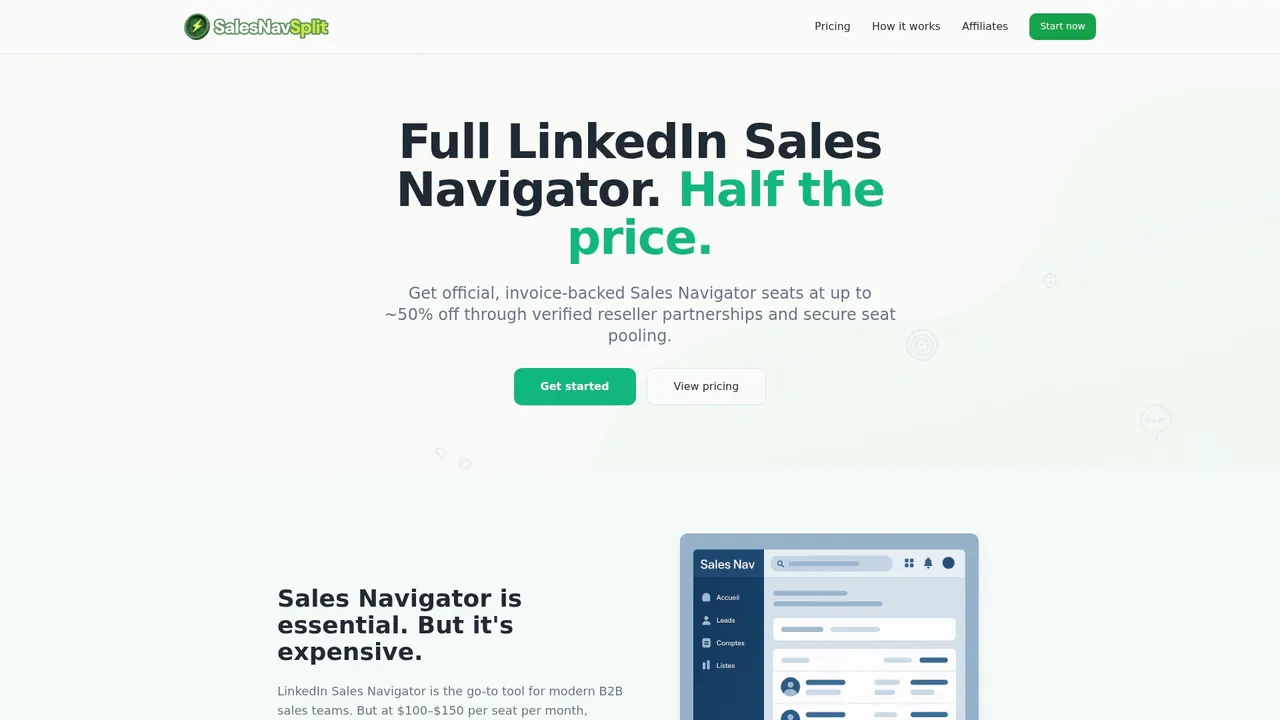
Salesnavsplit provides official LinkedIn Sales Navigator seats at up to 50% off standard pricing, through verified reseller partnerships in the US and Europe. Seats activate within two business hours European time, invoicing runs through Stripe, and every license is compliant with LinkedIn’s terms. Your reps get the full tool without your team absorbing the full cost. You can also explore the B2B outreach stack guide to see how Sales Navigator fits into a leaner, more effective sales workflow.
FAQ
What are the most effective sales team growth tips for managers?
Focus on building documented playbooks and coaching behaviors before scaling headcount. Sales team growth that holds up over time requires clear processes, consistent coaching, and protected selling time.
How do I improve sales team productivity without adding tools?
Audit how reps spend their time and eliminate or batch non-selling tasks like internal meetings and manual data entry. Sales professionals lose up to 15 hours per week on coordination work that does not generate revenue.
How should I handle underperformers on my sales team?
Use a structured 30 to 60-day improvement plan with specific, measurable skill goals developed together with the rep. Identify whether the issue is skill, motivation, or role fit before deciding on next steps.
What is the best way to retain top sales performers?
Go beyond commission by offering visible career paths, recognition for specific behaviors, and regular stay interviews. Top reps leave when they feel unchallenged or underappreciated, not just underpaid.
When should a sales team start using AI and automation tools?
After your reps have strong core selling skills and your sales process is documented. Treating AI as an accelerator of existing skills produces better results than using it as a substitute for foundational development.
Recommended
- Sales team collaboration steps: the sales manager’s guide - SalesNavSplit Blog
- Boost Sales With These Proven Sales Navigator Tips - SalesNavSplit Blog
- Build a sales follow-up workflow that closes more deals - SalesNavSplit Blog
- Sales tools checklist: Build your lean B2B outreach stack - SalesNavSplit Blog