
Sales licenses explained: What B2B sellers need to know
Sales licenses explained: What B2B sellers need to know
TL;DR:
- A sales license primarily authorizes a business to collect and remit sales tax at the state level.
- It differs from a business license, which permits overall company operation, and several licenses may be needed.
- Compliance depends on understanding nexus triggers and specific activity/channel licensing requirements across states.
Many B2B sales teams waste hours trying to figure out whether they actually need a “sales license” — and too often, they guess wrong. The term gets thrown around loosely, sometimes meaning a sales tax permit, sometimes a general business authorization, and occasionally something tied to a specific sales channel like telemarketing. That confusion isn’t just frustrating; it can lead to real penalties, missed compliance steps, and unnecessary anxiety about running your business legally. This guide cuts through the noise, gives you the real definitions, and walks you through exactly what your B2B sales operation needs to stay on the right side of the law.
Table of Contents
- What is a sales license? The real definition
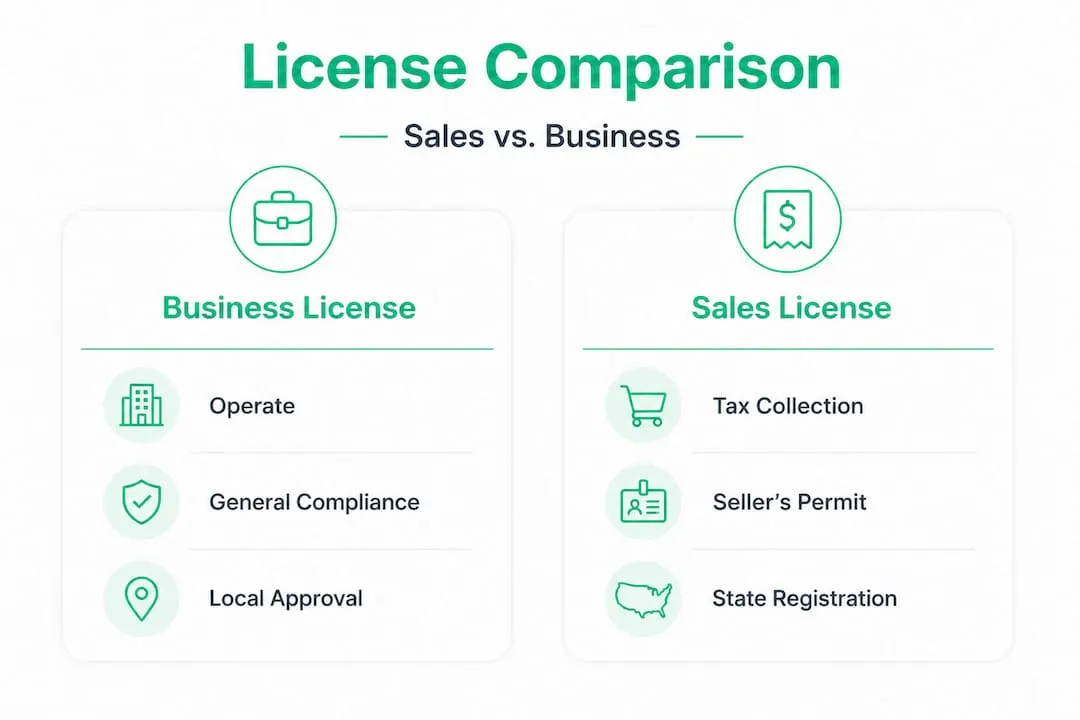
- Sales license vs. business license: What’s the difference?
- Why B2B sales teams need to care about sales licenses
- Special cases: Channel- and activity-specific sales licenses
- Key steps to stay compliant with sales license laws
- Why most B2B teams misunderstand sales licenses — and what actually matters
- Get more from your B2B sales team with the right tools
- Frequently asked questions
Key Takeaways
| Point | Details |
|---|---|
| Sales license = sales tax permit | A sales license usually means a permit to collect and remit state sales tax. |
| Business vs. sales license | Business licenses and sales licenses have different purposes and you may need both. |
| B2B compliance is state-specific | States have different rules—always check local sales license requirements for your sales channels. |
| Special cases exist | Some activities like telemarketing require extra licenses beyond standard sales tax permits. |
| Follow a compliance checklist | Identify, register, and maintain the right sales licenses to avoid costly mistakes. |
What is a sales license? The real definition
The phrase “sales license” trips up experienced business owners every day. That’s not surprising, because it isn’t a single, standardized legal term. Different states, accountants, and regulatory bodies use it to mean different things, often without flagging that distinction.
In most practical, everyday contexts, a “sales license” refers to a state tax authorization that allows a business to collect and remit sales tax on taxable sales. You may see it called a seller’s permit, a sales tax permit, a sales tax license, or a vendor’s license depending on which state you’re operating in. The label changes, but the core function stays the same: it registers your business with the state revenue authority and makes you legally responsible for collecting sales tax from buyers and sending that money to the government.
Here’s what a sales license typically covers:
- Collecting sales tax from customers on taxable transactions
- Remitting that tax to the appropriate state revenue department on a set schedule (monthly, quarterly, or annually)
- Tracking taxable sales so your reporting stays accurate during audits
- Operating in compliance with the state’s specific tax collection rules and thresholds
A sales license (seller’s permit, sales tax permit) is a legal authorization from your state government that both allows and requires you to collect sales tax. Without it, collecting tax from customers can actually be illegal in some states.
It’s worth being clear about what a sales license is not. It is not a general business license that allows you to operate a company within a city or county. It is not a professional certification or trade license. And it is not a federal requirement. Sales licenses are entirely state-level obligations, which is a major reason why the rules vary so much across the country.
For B2B sellers who rely on tools like B2B outreach tools, understanding this foundational distinction before layering on sales technology is a smart move. Know your compliance obligations first, then build your outreach stack on top of a clean legal foundation.
Sales license vs. business license: What’s the difference?
This is the comparison that causes the most real-world confusion, and it’s an expensive one to get wrong. The terms sound similar, they’re sometimes administered by overlapping agencies, and some businesses genuinely need both. But they serve completely different legal purposes.
Here’s a straightforward breakdown:
| Feature | Business license | Sales license (seller’s permit) |
|---|---|---|
| Purpose | Permission to operate your business | Authority to collect and remit sales tax |
| Issued by | City, county, or municipality | State revenue or tax authority |
| Who needs it | Most businesses operating in a jurisdiction | Businesses selling taxable goods or services |
| Tied to tax collection | No | Yes, directly |
| Renewal | Often annual | Varies by state; some are permanent |
| Cost | Usually a flat fee | Often free or very low cost |
In practice, the term “sales license” can be used ambiguously and confused with a general business license, but a sales tax license or permit is specifically about tax collection and remittance, not about permission to operate. This distinction matters legally and practically.
A restaurant in Texas, for example, needs a general business license from the city AND a sales tax permit from the Texas Comptroller. A software company selling SaaS products might only need a business license if its software isn’t taxable in its home state. Assuming one covers the other is a mistake that triggers audits, back taxes, and fines.

Pro Tip: When you register a new B2B business, list out every jurisdiction where you have customers or physical presence. Check both the local business license requirements and the state sales tax permit rules separately. They are administered by different offices and have different deadlines.
Getting your licensing structure right also applies to how you build your sales operations. If you’re working on compliant LinkedIn sales prospecting or scaling your LinkedIn sales strategies, operating with clean legal credentials makes every client conversation stronger.
Why B2B sales teams need to care about sales licenses
Here’s a common assumption that gets B2B sellers in trouble: “We sell to other businesses, so sales tax doesn’t apply to us.” That logic breaks down fast. While many B2B transactions are exempt from sales tax (especially when buyers provide a valid resale certificate or exemption certificate), the obligation to register and manage those exemptions still falls on the seller.
The state-specific requirements for sales tax registration apply to most B2B sellers who make taxable sales in a state where they have nexus. Nexus means a meaningful business connection to a state, which can be triggered by physical presence, remote employees, or hitting a certain volume of sales in that state.
Here are four common scenarios where B2B sellers need a sales license:
- Selling physical products to businesses in multiple states, even if you never set foot in those states
- Selling digital goods or SaaS in states that tax those categories (and more states are adding digital products to their taxable lists every year)
- Hiring remote employees in a new state, which can create nexus and trigger registration requirements
- Exceeding economic nexus thresholds, which most states set at $100,000 in sales or 200 transactions per year in that state
| Trigger | Example | Action required |
|---|---|---|
| Physical nexus | Warehouse in Ohio | Register in Ohio |
| Economic nexus | $110,000 in Texas sales | Register in Texas |
| Employee nexus | Remote rep living in Colorado | Register in Colorado |
| Affiliate nexus | Partner referrals in New York | May require registration |
Neglecting these triggers can result in significant back-tax liability, penalties, and interest. If you’re building B2B sales growth strategies or refining your B2B sales prospecting, compliance is the floor that everything else is built on. A surprise audit can wipe out months of margin.
Special cases: Channel- and activity-specific sales licenses
Most of this article has focused on sales tax permits, because that’s what “sales license” means in the majority of B2B situations. But there’s another layer that catches some sales teams completely off guard: channel-specific licenses.
Certain sales methods and certain industries trigger their own licensing requirements, entirely separate from sales tax obligations. Here are the most relevant ones for B2B sellers:
- Telemarketing licenses: Several states require businesses to register or obtain a license before conducting telephone-based sales outreach, including B2B calls. States like Florida and other states with active consumer protection frameworks have specific telemarketing registration rules.
- Regulated product licenses: If your B2B sales involve alcohol, cannabis, prescription products, firearms, or certain financial instruments, expect industry-specific licensing requirements at both the state and federal level.
- Real estate and insurance: Sales professionals in these categories almost always need a state-specific professional license to sell, regardless of whether they’re selling to consumers or businesses.
- Reseller and distributor permits: Some states require distributors or resellers to hold permits that go beyond a basic seller’s permit, especially in industries like food, beverage, or manufacturing.
Some states require additional licensing for specific sales activities or channels, such as telemarketing licenses, meaning that “sales license” can refer to very different things depending on the type of selling activity and jurisdiction. This is the core source of confusion for B2B teams running multichannel outreach.
Pro Tip: Before launching a new outbound sales campaign through phone or SMS channels, check whether your target states have telemarketing registration requirements for B2B outreach. Florida’s Telemarketing Act, for example, has specific registration and compliance rules that apply broadly. Don’t assume B2B exemptions exist.
Thinking about your outreach more strategically? Solid pipeline management for B2B starts with knowing exactly which activities in each channel are both legally permitted and properly licensed.
Key steps to stay compliant with sales license laws
Compliance sounds overwhelming, but it breaks down into a straightforward process. Work through these steps methodically and you’ll have a solid foundation for multi-state B2B sales operations.
- Map your nexus footprint. List every state where you have employees, warehouses, or significant sales volume. That’s where you may have tax obligations.
- Check taxability for your products and services. Not everything is taxable. SaaS, professional services, and some physical goods may be exempt in certain states. Verify before assuming.
- Register for a seller’s permit in each nexus state. Most states allow online registration through their department of revenue or tax authority website. Many registrations are free.
- Identify channel-specific requirements. If your team uses phone outreach, review telemarketing license requirements in your target states.
- Set up a tax collection and reporting process. Once registered, you’re legally required to collect tax on taxable sales and file returns on the state’s schedule, usually monthly or quarterly.
- Renew and maintain your licenses. Some states require periodic renewal. Mark renewal dates and file returns even in periods with zero taxable sales, because lapsing can trigger penalties.
The California CDTFA describes a seller’s permit as a state-issued license directly tied to sales tax obligations, with ongoing requirements to report and pay sales and use tax. Missing a filing period, even once, can generate automatic penalties.
When you’re building out the legal and operational side of your B2B business, pairing compliance with the right tools makes the whole system more efficient. Understanding choosing Sales Navigator plans is one example of aligning your outreach investments with the scale you’re actually licensed to reach.
Why most B2B teams misunderstand sales licenses — and what actually matters
After working with B2B sales professionals across dozens of industries, one pattern stands out clearly: most teams treat “sales license” as an annoying checkbox, something to hand off to a lawyer and forget about. That mindset leads to expensive mistakes.
The real problem isn’t that B2B sellers ignore compliance entirely. It’s that they often misidentify which type of license applies to their situation. They register for a general business license and assume that covers sales tax obligations. Or they register for a seller’s permit and assume that covers their telemarketing outreach. Neither assumption is safe.
When you use the phrase “sales license” with accountants or state agencies, the right move is to ask which type they mean, whether they’re talking about a tax license, a general business license, or a regulated sales channel license, because different licenses serve completely different legal purposes. Asking that clarifying question upfront saves hours of back-and-forth and prevents the wrong registration from creating a false sense of security.
Here’s the mindset shift that actually works: treat the phrase “sales license” as a prompt to ask a better question, not as a box to check. When someone says your business needs a sales license, the productive response is “Which type, for what activity, in which state?” That question immediately surfaces the real compliance requirement.
A compliance-first mindset doesn’t slow down B2B growth. It actually accelerates it. Teams that know exactly what they’re licensed to do in each state and through each channel prospect more confidently, close deals faster, and never have to pause a campaign because a state agency sends a notice. Audit risk drops. Client credibility goes up. And your legal exposure stays manageable, even as you scale.
For B2B teams optimizing every part of their process, understanding the relationship between compliance and tools is part of that growth picture. Check out LinkedIn reseller savings as one practical way to stretch your sales budget further while keeping your outreach above board.
Get more from your B2B sales team with the right tools
Once your compliance foundation is solid, the next step is making your outreach work harder. Licensing is the floor. Prospecting tools are how you build on top of it.
At salesnavsplit.com, we help B2B sales professionals access official LinkedIn Sales Navigator seats at roughly 50% off standard pricing, sourced through verified reseller partnerships in the US and Europe. No credential hacks, no gray-market workarounds: just genuine, secure licenses with fast activation and official invoicing through Stripe. If you’re putting together a building a lean B2B stack, starting with affordable, compliant Sales Navigator access is one of the smartest moves you can make. Your team gets the full power of LinkedIn’s premium prospecting features at a price that actually fits a real business budget.
Frequently asked questions
Do I need a sales license for B2B sales if my products aren’t taxable?
If your products or services are not taxable in your state, you usually do not need a sales license, but always verify local requirements to confirm your specific exemption status.
Can remote or online B2B sellers be required to get a sales license?
Yes; many states require remote or online B2B sellers who meet nexus thresholds to register for a sales license, even without physical presence in that state.
What happens if I operate without the right sales license?
Operating without a required seller’s permit can result in fines, back taxes with interest, and in serious cases, suspension of your ability to do business in that state.
Does the term ‘sales license’ ever mean something other than a tax permit?
Yes; depending on your industry or sales channel, “sales license” can refer to channel-specific registrations like telemarketing licenses or permits for regulated product categories, not just sales tax obligations.
Recommended
- Sales tools checklist: Build your lean B2B outreach stack - SalesNavSplit Blog
- Sales Navigator Plans: Choosing the Right Option for B2B Teams - SalesNavSplit Blog
- What is a LinkedIn reseller? Guide to saving on Sales Navigator - SalesNavSplit Blog
- B2B Pipeline Management: Optimize Sales with LinkedIn - SalesNavSplit Blog