
How Discount Seats Work for Software Licenses
How Discount Seats Work for Software Licenses
TL;DR:
- Discount seats are fully compliant software licenses sold at 40–70% off retail through authorized resellers who buy in bulk. Early purchases access lower prices, while last-minute buying often costs more due to pricing algorithms that close discount tiers over time. These seats offer the same features as full-price licenses, with contractual restrictions being the main difference.
Discount seats are defined as licensed software access sold below standard retail price through wholesale bulk purchasing agreements between vendors and authorized resellers. Understanding how discount seats work is critical for sales teams and individual reps who want full-featured tools without paying full-price rates. The consolidator model, which mirrors structures used in airline ticketing and theater, allows authorized partners to purchase bulk licenses at negotiated wholesale rates and resell them at 40–70% below published prices. For LinkedIn Sales Navigator users specifically, this means accessing the same professional-grade features at a fraction of the cost.
How do wholesale consolidator models enable discount seat pricing?

The consolidator model is the engine behind every legitimate discount seat. An authorized partner purchases a block of licenses directly from the vendor at a negotiated wholesale rate. That partner then resells individual seats to end users at prices well below retail, while still maintaining a margin and staying fully compliant with the vendor’s licensing terms.
Consolidator rates typically range from 40% to 70% below published retail prices. That spread exists because vendors benefit from guaranteed bulk revenue upfront, while resellers absorb the distribution cost and pass savings to buyers.
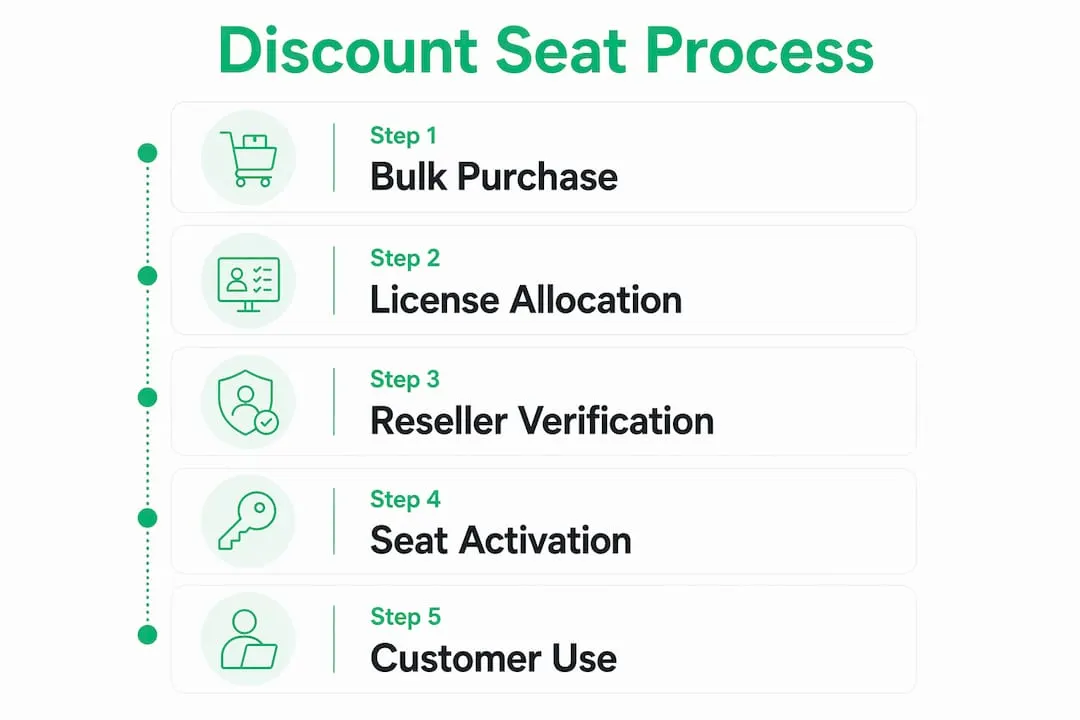
For software licenses, the mechanics work like this:
- The vendor sells a block of seats to a verified reseller at a wholesale rate.
- The reseller activates individual seats for end users under the vendor’s official terms.
- The end user receives a genuine, fully functional license at a reduced price.
- The vendor’s terms of service remain intact throughout the transaction.
Salesnavsplit operates exactly this way. The platform sources LinkedIn Sales Navigator seats through verified reseller partnerships in the US and Europe, activates seats within 24–48 hours, and invoices through Stripe. The result is an official license at roughly 50% off standard pricing.
Pro Tip: Always confirm that a discount seat provider is an authorized reseller before purchasing. An unauthorized reseller may offer lower prices but risks account suspension or credential theft.
The compliance piece matters more than most buyers realize. Wholesale license blocks sold through unauthorized channels violate vendor terms and can result in account termination. Authorized consolidators like Salesnavsplit prevent that risk entirely.
What pricing strategies control discount seat availability?
Discount seat pricing is not random. Vendors and resellers use customer segmentation to separate price-sensitive buyers from those willing to pay full price. The goal is to fill license capacity while protecting revenue from buyers who would pay more anyway.
The primary driver for discount seats is sophisticated customer segmentation. Discounts get locked behind barriers like advance purchase requirements, license type restrictions, or membership eligibility. This keeps full-price buyers from accessing the lower tier.
Pricing algorithms add another layer of control. Consider how this plays out in practice:
- Early buyers access the lowest price tier, reserved for those who commit well in advance.
- Mid-cycle buyers pay a moderate rate as lower tiers close.
- Late buyers face the highest prices as cheap buckets disappear.
- Last-minute purchases almost always cost more, not less.
That last point surprises most buyers. Last-minute pricing in B2B SaaS often costs more than early purchase pricing, defying the popular assumption that waiting yields better deals. Lower price tiers get reserved for early buyers, and urgency works against the buyer’s wallet.
Revenue management segmentation helps providers balance profitability while offering discount seats to price-sensitive segments. The system is not designed to reward patience. It is designed to reward commitment. Buyers who plan ahead and purchase early consistently access the best discount tiers, while those who wait lose access to those pricing buckets entirely.
Pricing algorithms close lower-cost buckets at set time thresholds, regardless of remaining inventory. A seat that costs $50 on Monday may cost $90 on Friday simply because an algorithmic boundary was crossed.
What trade-offs come with discount seats?
Discount seats deliver the same core functionality as full-price licenses. The difference lies in the terms attached, not the features included. Discounted seats maintain license quality equivalent to full-price versions. Restrictions are contractual, not functional.
Common trade-offs buyers should expect include:
- Modification limits. Discount seats may not allow mid-term upgrades or plan changes without penalty.
- Refund restrictions. Many discount licenses are non-refundable once activated.
- Support tiers. Some discount agreements provide standard support rather than priority access.
- Configuration constraints. Deep discounting trade-offs often mean reduced control over license configurations, similar to “mystery tickets” in theater where the best available seat is assigned by agreement, not buyer preference.
None of these restrictions affect what the software actually does. A discounted LinkedIn Sales Navigator seat gives the same search filters, InMail credits, and lead management tools as a full-price seat. The LinkedIn seats explained breakdown confirms that seat-level features remain identical regardless of how the license was purchased.
The most common misconception is that a lower price signals a lower-quality product. That belief costs sales teams real money. Quality gap is not about function but about terms of use. A team that understands this distinction can access professional tools at a fraction of the cost without sacrificing performance.
Pro Tip: Read the reseller’s terms before activating a discount seat. Confirm refund policy, support level, and whether mid-term plan changes are permitted. Knowing these details upfront prevents surprises later.
How can teams find and use discount seats for sales tools?
Finding legitimate discount seats for sales software requires knowing where to look and when to buy. The best prices come from authorized reseller platforms, membership programs, and early purchase windows.
| Purchase Method | Typical Savings | Key Consideration |
|---|---|---|
| Authorized reseller platform | 40–50% off retail | Verify reseller partnership status before buying |
| Membership programs | Up to 70% off retail | Annual membership fees apply; service fees of $10–$15 per transaction are common |
| Direct vendor promotions | 10–20% off retail | Limited availability; often tied to contract length |
| Last-minute inventory | Rarely discounted | Last-minute inventory requires purchase within a 24–48 hour window and often costs more |
For teams managing multiple licenses, seat allocation strategy matters as much as purchase timing. Practical steps that protect both budget and compliance:
- Audit your team’s actual usage before purchasing seats. Unused licenses waste money even at discount rates.
- Purchase seats in advance to access the lowest price tier before algorithmic boundaries close cheaper buckets.
- Consolidate licenses under one reseller account to simplify billing and renewal tracking.
- Verify that the reseller provides official invoicing, which is required for business expense reporting.
Salesnavsplit addresses each of these points directly. The platform offers Sales Navigator at up to 50% off, activates seats within 24–48 hours, and issues official invoices through Stripe. Teams get genuine licenses without the administrative complexity of managing multiple vendor relationships.
The timing principle applies here too. Buyers who plan their license renewals in advance consistently pay less than those who wait until a seat expires. Treating software license purchases with the same planning discipline as any other procurement decision produces measurable savings over a full year.
Key Takeaways
Discount seats deliver full-featured software licenses at 40–70% below retail through authorized consolidator models, with trade-offs limited to contractual terms rather than functional capability.
| Point | Details |
|---|---|
| Consolidator model drives savings | Authorized resellers buy bulk licenses at wholesale rates and pass 40–70% savings to end users. |
| Early purchase wins the best price | Pricing algorithms close cheap tiers at set thresholds, so waiting almost always costs more. |
| Quality stays the same | Discount seats carry the same features as full-price licenses; restrictions are contractual, not functional. |
| Verify reseller authorization | Only authorized resellers guarantee compliance with vendor terms and protect against account risk. |
| Plan team licenses in advance | Auditing usage and buying early maximizes savings and simplifies renewal management. |
The part most buyers get wrong
Most sales teams I talk to assume discount seats are a workaround. They picture gray-market licenses, shady resellers, or features that quietly disappear after activation. That assumption is wrong, and it costs them real money every year.
The consolidator model is not a loophole. It is a deliberate distribution channel that vendors use to fill license capacity across price-sensitive market segments. The same logic that fills airline seats and Broadway theaters applies directly to B2B software. Vendors want full adoption. Resellers want margin. Buyers want savings. The authorized consolidator model satisfies all three.
What I find more interesting is the pricing behavior. Most buyers think waiting gives them leverage. The data says the opposite. Early buyers consistently access the lowest tiers. Late buyers pay a premium for urgency. If your team is renewing licenses at the last minute every year, you are paying more than you need to, not less.
The trade-offs are real but manageable. Non-refundable terms and limited configuration options are the price of a 50% discount. For a sales rep or a small team that knows they need the tool for the next 12 months, those restrictions are irrelevant. The reseller seat model is transparent about what you give up and what you keep. That transparency is what separates a legitimate discount from a risky one.
My recommendation: treat discount seat purchases like any other procurement decision. Verify the reseller, read the terms, buy early, and allocate seats based on actual usage. Done right, the savings are substantial and the risk is minimal.
— Toinon
Salesnavsplit: official LinkedIn Sales Navigator seats at half the price
Sales teams that understand how discount seating works have a clear advantage. Salesnavsplit puts that advantage into practice by offering official LinkedIn Sales Navigator licenses at up to 50% off standard pricing through verified reseller partnerships in the US and Europe.
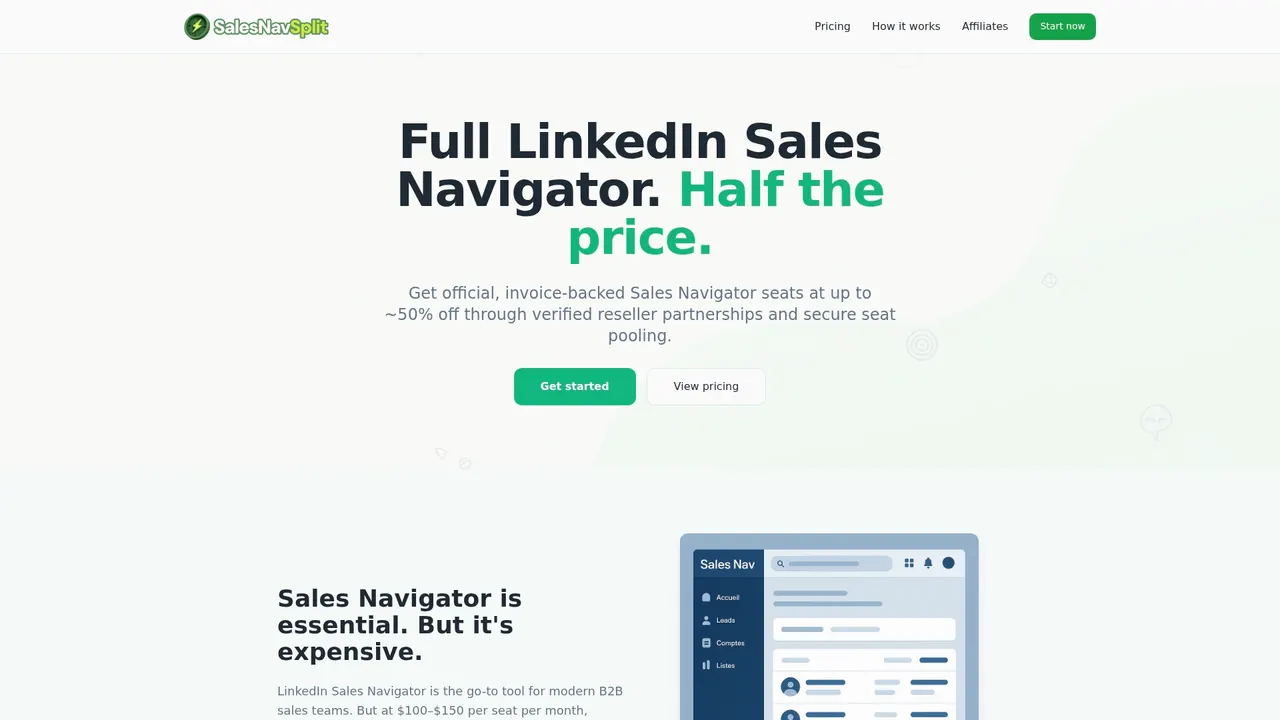
Every seat activated through Salesnavsplit is genuine, compliant with LinkedIn’s terms of service, and invoiced officially through Stripe. Setup takes minutes via Google, and seats go live within 24–48 hours. There are no gray-market risks, no credential sharing, and no hidden fees. Teams that want to compare licensing options before committing can review the Sales Navigator vs. Premium Business breakdown to confirm which plan fits their workflow before purchasing.
FAQ
What are discount seats in software licensing?
Discount seats are official software licenses sold below standard retail price through authorized reseller or consolidator agreements. The license features remain identical to full-price versions; only the contractual terms may differ.
How do discount seats stay compliant with vendor terms?
Authorized resellers purchase bulk license blocks directly from the vendor under negotiated wholesale agreements. These agreements define the terms of resale and keep every activated seat fully compliant with the vendor’s licensing rules.
Why do last-minute discount seats often cost more?
Pricing algorithms close lower-cost license tiers at set time thresholds, regardless of remaining inventory. Buyers who wait until the last minute lose access to early-purchase price buckets and typically pay a higher rate.
Are discount seats lower quality than full-price licenses?
No. Discounted seats maintain quality equivalent to full-price versions. Differences are contractual, covering areas like refund policy or support tier, not the features or functionality of the license itself.
How does Salesnavsplit offer LinkedIn Sales Navigator at a discount?
Salesnavsplit sources seats through verified reseller partnerships in the US and Europe, purchasing license blocks at wholesale rates and passing the savings to buyers. Seats activate within 24–48 hours and come with official Stripe invoicing.
Recommended
- Is SalesNavSplit Safe & Legal? How the Reseller-Seat Model Works | SalesNavSplit
- LinkedIn Seats Explained: Access, Cost, and Team Benefits - SalesNavSplit Blog
- Sales licenses explained: What B2B sellers need to know - SalesNavSplit Blog
- LinkedIn Premium & Sales Navigator - Up to 60% Off | Official Licenses