
Why Secure Sales Licenses Matter for Your Business
Why Secure Sales Licenses Matter for Your Business
TL;DR:
- Secure sales licenses enable businesses to legally operate and build trust with regulators and customers.
- Failing to maintain proper licensing can lead to costly fines, license revocations, and operational interruptions.
Secure sales licenses are legal authorizations that allow your business to sell products or services in compliance with federal, state, and industry-specific regulations. Without them, every transaction your team completes carries legal exposure. The question of why secure sales licenses matter is not abstract. It determines whether your business survives an audit, retains its operating rights, and builds the kind of credibility that closes deals. From Microsoft Dynamics 365 seat assignments to firearms dealer permits governed by ATF regulations, the consequences of getting licensing wrong are concrete and expensive.
Why secure sales licenses matter for compliance and growth
Secure sales licenses serve three functions simultaneously: they authorize your business to operate, they define the scope of what you can legally sell, and they create the paper trail regulators expect when they come knocking. The importance of sales licenses goes beyond paperwork. A license is a legal contract between your business and the regulatory environment it operates in.
The benefits of secured licenses fall into four clear categories:
- Compliance with tax and legal requirements. Seller’s permits are distinct from general business licenses and are required specifically to collect and remit sales tax once economic nexus thresholds are met. Confusing the two is one of the most common and costly mistakes small business owners make.
- Reduced exposure to fines and revocation. California’s Business & Professions Code sets penalties at up to $5,000 per offense for licensing violations, with criminal charges possible depending on severity. That is not a theoretical risk. It is a documented enforcement pattern.
- Customer trust and business credibility. Buyers, especially in B2B sales, increasingly verify vendor compliance before signing contracts. A verifiable, official license signals that your operation is legitimate and your data practices are accountable.
- Audit readiness. Businesses with documented, time-stamped license records can respond to regulatory inquiries without scrambling. Those without them spend weeks reconstructing records under pressure.
Pro Tip: Treat your license portfolio the way you treat your CRM. Review it quarterly, flag expiring permits, and assign ownership to a specific person on your team. Licenses that nobody owns are licenses that lapse.
How do licensing violations commonly occur?

Most licensing violations do not start with intent. They start with misunderstanding. A sales rep gets assigned the wrong software seat. A retailer crosses a state’s economic nexus threshold without realizing it. A firearms dealer fails to update a digital record within the required window. The violation is real regardless of the intent behind it.
Here are the most common paths to a licensing violation:
- Wrong license tier assignment. Misuse of Microsoft Dynamics 365 Team Members licenses is one of the most documented violations in enterprise software. One mid-market company with 30 misconfigured licenses faced six-figure retroactive costs plus penalties up to 20%. The lesson: license type must match actual user activity, not job title.
- Multiplexing violations. Using one licensed seat to serve multiple unlicensed users, even through automated workflows, violates most software licensing agreements. Vendors audit for this specifically.
- Failure to update records after personnel changes. When a licensed employee leaves, their license does not automatically transfer or expire cleanly. Businesses that fail to reconcile seats after turnover accumulate ghost licenses and compliance gaps.
- Crossing economic nexus thresholds without a seller’s permit. Online sellers who exceed a state’s revenue or transaction threshold are legally required to collect sales tax in that state. Operating without the corresponding permit after crossing that threshold is a violation, even if unintentional.
“Willful violations to federal licensing often hinge on deliberate or knowing conduct. Careful practices prevent crossing this threshold.” The ATF revoked 195 federal firearms licenses in FY 2024 alone, defining willfulness as deliberate or intentional unlawful conduct. That standard matters because it shapes how regulators interpret your record-keeping practices.
The impact of sales licensing failures compounds over time. A single missed permit triggers a fine. Repeated violations trigger audits. Audits trigger scrutiny of your entire operation. The businesses that understand why official licenses matter treat compliance as a continuous process, not a one-time checkbox.
What systems and processes support maintaining secure sales licenses?
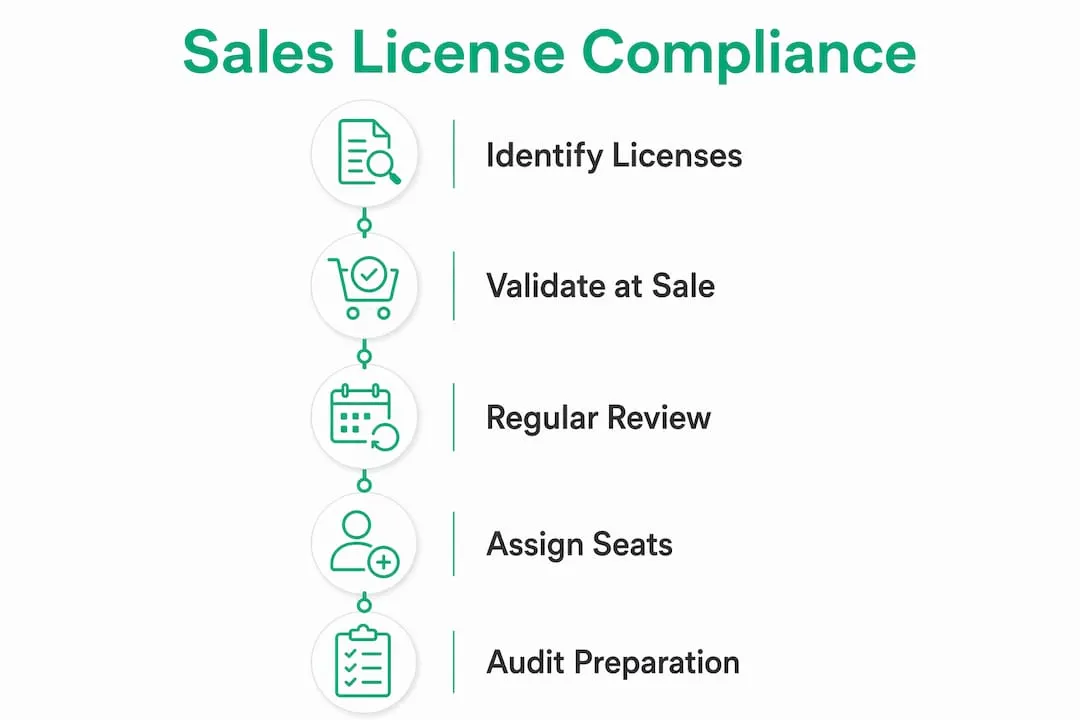
The businesses that stay compliant do not rely on memory or manual spreadsheets. They build licensing validation into their workflows so that compliance happens automatically at the point of transaction.
Here is what a functional licensing compliance system looks like in practice:
- Periodic entitlement reconciliation. Annual use rights checks before renewal periods are the minimum standard recommended by Microsoft for Dynamics 365 deployments. Practitioners treat this like inventory management, comparing user activity logs against license entitlements to catch drift before it becomes a violation.
- Real-time API validation at checkout. In firearms retail, instant API calls during checkout confirm dealer license status before a transaction completes. This model applies beyond firearms. Any regulated product category benefits from embedding license checks at the transactional point rather than reviewing them after the fact.
- Digital record-keeping with authentication. Federal firearms record-keeping requires comprehensive, time-stamped, user-authenticated electronic logs. That standard reflects a broader regulatory direction: regulators want to know who accessed what, when, and under which license.
- Government verification tools. The USCIS SAVE system supports over 1,300 agencies in verifying applicant eligibility for licensing determinations. SAVE does not decide eligibility itself. It provides fast, secure status verification that agencies use to build defensible licensing workflows.
Pro Tip: Embed license validation at the point of sale or seat assignment, not after the fact. After-the-fact compliance reviews catch violations that have already occurred. Front-end validation prevents them.
| Compliance method | Best use case |
|---|---|
| Annual entitlement reconciliation | Software seat management and SaaS license audits |
| Real-time API license validation | Regulated product checkout (firearms, pharmaceuticals, age-restricted goods) |
| Digital authenticated record-keeping | Industries with federal audit requirements |
| Government verification tools (SAVE) | Licensing intake processes requiring identity or status verification |
How do different types of sales licenses impact business operations?
Not all licenses are the same, and treating them as interchangeable is where most small business owners get into trouble. A business license authorizes you to operate. A seller’s permit authorizes you to collect sales tax. An FFL (Federal Firearms License) authorizes you to sell firearms. A software license authorizes specific users to access specific features. Each one carries distinct obligations, renewal timelines, and audit requirements.
The seller’s permit does not equal a business license. Confirming which specific license type applies to each revenue stream protects you from both tax errors and regulatory penalties. Online sellers face a particular complexity: economic nexus rules mean you may need seller’s permits in multiple states simultaneously, each with different thresholds and filing schedules.
| License type | Primary function | Key compliance obligation |
|---|---|---|
| Business license | Authorizes general operation | Annual renewal with local government |
| Seller’s permit | Authorizes sales tax collection | Filing and remittance per state schedule |
| FFL (Federal Firearms License) | Authorizes firearms sales | ATF record-keeping and inspection compliance |
| Software seat license | Authorizes specific user access | Entitlement reconciliation and usage audits |
The distinction between having a license and having the right license is where audits are won or lost. A business that holds a general business license but lacks a seller’s permit in a state where it has crossed economic nexus is not partially compliant. It is non-compliant. Regulators do not grade on a curve. Understanding the full scope of sales licenses for your specific business model is the starting point for building a defensible compliance posture.
For B2B sales teams using platforms like LinkedIn Sales Navigator, the same logic applies. Using unofficial or shared credentials instead of properly assigned seats is a licensing violation under LinkedIn’s terms of service. It creates the same audit exposure as any other license misuse, just in a different regulatory context.
Key takeaways
Secure sales licenses protect your business from fines, audits, and operational shutdowns by ensuring every transaction occurs within the legal framework your industry requires.
| Point | Details |
|---|---|
| License type specificity | A business license and a seller’s permit are legally distinct. Holding one does not satisfy the other. |
| Violation consequences | Penalties reach $5,000 per offense in California, with federal license revocations numbering 195 in FY 2024. |
| Front-end validation | Embedding license checks at the point of transaction prevents violations rather than catching them after the fact. |
| Annual reconciliation | Reviewing license entitlements annually against actual usage is the minimum standard for software and SaaS compliance. |
| Right license, not just any license | Economic nexus rules and industry-specific permits mean businesses often need multiple license types simultaneously. |
Why license hygiene is the most underrated part of sales management
I have worked with sales teams that treat licensing as a legal department problem. They sign up for tools, assign seats without checking entitlements, and assume that because they paid for something, they are covered. That assumption is wrong, and it is expensive.
The most consistent pattern I see in compliance failures is not malice. It is drift. A company starts with the right licenses, then grows. Roles change, tools get added, and nobody updates the license map. Six months later, the actual usage profile looks nothing like the licensed entitlements. That gap is where audits find their material.
What actually works is treating license management as part of sales hygiene, the same way you treat pipeline hygiene or data hygiene. It is not a one-time setup. It is a recurring practice. The teams that do this well assign a license owner, run quarterly checks, and document every change. They also choose tools that come with official, verifiable licenses from the start, because unofficial workarounds create exactly the kind of audit exposure that compliance hygiene is designed to prevent.
The businesses I have seen grow without compliance blowups share one trait: they invest in compliant sales software from day one rather than retrofitting compliance after a violation surfaces. That is not caution. That is strategy.
— Toinon
How Salesnavsplit supports compliant sales licensing
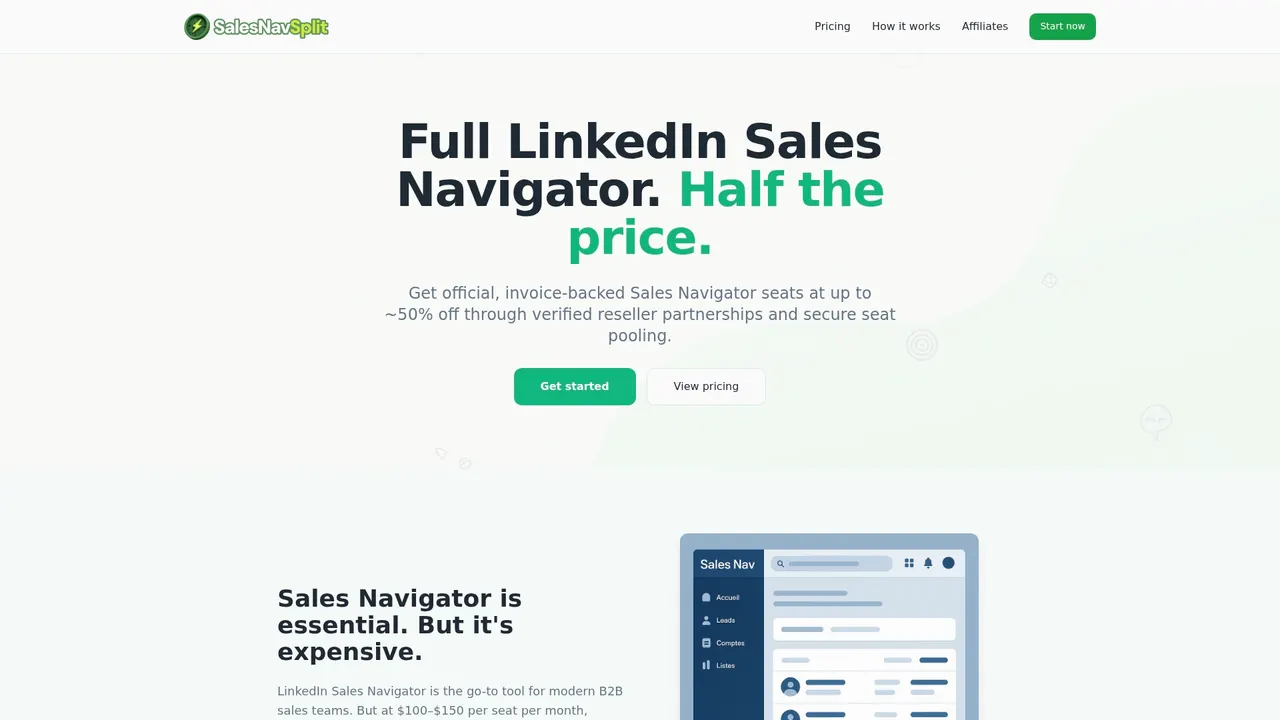
Salesnavsplit provides official LinkedIn Sales Navigator seats at approximately 50% off standard pricing, sourced through verified reseller partnerships in the US and Europe. Every seat is genuine, compliant with LinkedIn’s terms of service, and activated within 24 to 48 hours. For sales professionals and small business owners who need the prospecting power of Sales Navigator without the compliance risk of shared credentials or unofficial workarounds, Salesnavsplit delivers a licensed, audit-ready solution. Payments process through Stripe with official invoicing, and reseller verification prevents the credential hacks and suspicious activity that come with unlicensed alternatives. Access official Sales Navigator seats and keep your sales stack compliant from day one.
FAQ
What is a secure sales license?
A secure sales license is a legally issued authorization that permits a business or individual to sell specific products or services in compliance with applicable regulations. It includes proper documentation, verified entitlements, and audit-ready records.
Why do sales licenses matter for small businesses?
Sales licenses protect small businesses from fines, tax penalties, and operational shutdowns. California’s Business & Professions Code sets penalties up to $5,000 per offense, and federal violations can result in license revocation.
What is the difference between a seller’s permit and a business license?
A seller’s permit specifically authorizes a business to collect and remit sales tax, while a business license authorizes general operation. Online sellers must obtain seller’s permits in each state where they exceed economic nexus thresholds.
How do software licensing violations occur in sales teams?
Software licensing violations most commonly occur through incorrect seat tier assignments, multiplexing, or failure to reconcile licenses after employee turnover. Microsoft Dynamics 365 Team Members license misuse is one of the most documented examples, with retroactive costs reaching six figures.
How often should a business review its sales licenses?
Annual entitlement reviews are the minimum standard recommended for software licenses, with more frequent checks advised for regulated industries. Embedding license validation directly into sales workflows reduces the risk of violations occurring between review cycles.
Recommended
- Why official licenses matter for effective B2B sales - SalesNavSplit Blog
- Sales licenses explained: What B2B sellers need to know - SalesNavSplit Blog
- Why protect sales accounts: A guide for B2B sales pros - SalesNavSplit Blog
- Stay compliant: smart sales tools for LinkedIn & B2B outreach - SalesNavSplit Blog